Web Development

A Closer Look at Microsoft’s Web Development Ecosystem: Why .NET Still Deserves Attention

When it comes to web development, Microsoft’s tools often spark strong opinions. Some developers avoid them entirely, arguing that the ecosystem is too tied to a single platform, that the .NET framework feels heavy, or that cross-browser compatibility and usability can sometimes be challenging compared to more lightweight open-source alternatives.

These concerns are not entirely without merit. Like any large-scale development platform, .NET has its trade-offs. However, focusing only on the criticism ignores a broader and more interesting question: what does Microsoft actually offer to web developers today, and why do many still choose it for modern web applications—especially in the era often associated with “Web 2.0” style development?

A more balanced view shows that .NET has evolved into a powerful, mature, and highly productive ecosystem that continues to compete strongly in enterprise and large-scale web development.


Rethinking the Criticism Around .NET

One of the most common arguments against Microsoft’s development stack is that it locks developers into a specific environment. Historically, this perception came from older versions of Microsoft’s tooling, where Windows dependency and proprietary technologies were more rigid.

Another frequent criticism is performance and “bloat.” Earlier versions of .NET were indeed heavier compared to minimalist frameworks of the time. Similarly, concerns about complexity and learning curve have been raised, especially by developers coming from PHP, JavaScript-first stacks, or open-source ecosystems.

While these critiques reflect real experiences from the past, they do not fully represent the modern state of the platform. Over time, Microsoft has significantly reworked .NET into a more modular, cross-platform, and performance-oriented framework.


Why Developers Still Choose .NET for Web Development

Despite the criticism, .NET continues to be widely used across startups, enterprises, and large-scale systems. The reasons are not accidental—they are tied to practical advantages that become especially clear in production environments.

1. A Mature and Free Development Environment

Modern .NET development is supported by a robust set of free tools. Visual Studio Community Edition and Visual Studio Code provide powerful environments without requiring expensive licenses for most developers. This lowers the barrier to entry and makes it accessible to individuals, startups, and teams alike.


2. Integrated Database Support and SQL Server Ecosystem

Microsoft’s database offerings, particularly SQL Server, integrate tightly with the .NET ecosystem. This creates a streamlined workflow for building data-driven applications, especially where reliability, transactions, and structured data are important.

Even though SQL Server is not the only option available, its deep integration with .NET remains a major advantage for enterprise applications.


3. Rich Frameworks for Web Applications

Historically, technologies like ASP.NET and related toolkits (including early Ajax-oriented solutions such as Atlas) helped bridge the gap between traditional server-rendered pages and more interactive web experiences.

Today, that evolution continues with modern ASP.NET Core, which supports high-performance APIs, MVC architectures, and real-time web applications through tools like SignalR.


4. Cross-Platform and Flexible Deployment

One of the biggest misconceptions about .NET is that it is tied strictly to Windows. Modern .NET is fully cross-platform, running on Windows, Linux, and macOS. This makes it suitable for cloud-native applications, containerized deployments, and large distributed systems.

It also integrates smoothly with major cloud platforms, especially Microsoft Azure, but is not limited to it.


5. Scalability for Enterprise Systems

.NET has long been associated with enterprise-level applications, and this reputation is still justified. The framework is designed to handle large workloads, complex business logic, and high-traffic environments.

This makes it a common choice for banking systems, logistics platforms, SaaS products, and internal enterprise tools where stability matters more than experimental flexibility.


6. Strong Backing and Long-Term Support

One of the less technical but important factors is stability over time. Microsoft invests heavily in long-term support releases, backward compatibility strategies, and structured roadmap planning.

For businesses, this predictability reduces risk and makes long-term system maintenance more manageable.


7. Productivity and Developer Experience

Modern .NET development focuses heavily on productivity. Features such as strong typing, integrated debugging, scaffolding tools, and extensive libraries allow developers to build complex applications faster than many fragmented toolchains.

While some developers prefer more minimal or flexible stacks, others value the structure and consistency that .NET provides.


8. Integration With Modern Web and Cloud Ecosystems

Modern .NET is not isolated from the broader web ecosystem. It integrates with JavaScript frameworks, APIs, microservices architectures, and cloud-native tooling.

This hybrid capability makes it suitable for full-stack development, where backend services in .NET can work seamlessly with frontend frameworks like React or Angular.


9. Continuous Evolution of the Platform

The platform has evolved significantly from its earlier iterations. Features that were once considered limitations—such as platform dependency or heavyweight tooling—have been actively addressed through modernization efforts.

Today’s .NET is more modular, faster, and more open than many developers expect based on older impressions.


Final Perspective

Microsoft’s web development ecosystem is often judged based on legacy perceptions rather than current capabilities. While no platform is perfect, .NET today is a highly capable, scalable, and well-supported framework that continues to power a large portion of the web.

For developers building serious, long-term applications—especially in enterprise or cloud environments—it remains a practical and competitive choice, not a relic of the past.


Mental Health

Meta-Backed Hupo Gains Traction After Pivot From Mental Wellness to AI Sales Coaching

When Hupo co-founder and CEO Justin Kim first started building the company, its mission looked very different from what it is today. Originally launched around four years ago under the name Ami, the startup focused on mental wellness and behavioral change—helping people manage stress, build habits, and improve emotional resilience.

At the time, the idea centered on how individuals respond to pressure and how long-term behavior is shaped. But over time, that direction evolved significantly. Today, Hupo operates in a completely different space: AI-powered sales coaching for enterprise financial services teams.

The transformation reflects a broader shift in how AI startups are rethinking product-market fit—not just building tools around abstract personal improvement, but embedding intelligence directly into high-value professional workflows.


From Human Behavior to Performance Systems

Kim has described his long-standing interest in performance, shaped in part by his passion for competitive sports such as basketball, football, Formula 1, and MMA. That interest eventually influenced how he thought about work performance in corporate environments.

Rather than focusing solely on wellness or motivation, he began to study how performance varies across teams in high-pressure environments. One recurring insight stood out: results often depend less on individual motivation and more on training quality, feedback consistency, and confidence under pressure.

That realization became the foundation for Hupo’s pivot.

Instead of building a consumer-facing mental wellness product, the company began reorienting itself toward enterprise performance systems—specifically targeting industries where communication quality and decision-making directly impact revenue.


Why Sales Coaching Became the Focus

Hupo’s current product is centered on AI-driven sales coaching, particularly for organizations in banking, insurance, and financial services (BFSI).

In these industries, sales performance is notoriously inconsistent across teams. Large organizations often struggle with scaling training effectively, especially when managers cannot directly monitor every customer interaction or provide real-time feedback.

Hupo’s approach aims to address that gap by using AI systems that can analyze conversations and provide immediate coaching insights during or after client interactions. Instead of relying solely on periodic training sessions, the platform integrates feedback into daily workflows.

According to Kim, the shift from wellness to sales coaching was not a complete break from the company’s original vision. In both cases, the underlying problem is human performance at scale—how individuals improve when systems, feedback, and context are limited.


Backing From Meta and Enterprise Expansion

Hupo’s early development received backing from Meta, which participated in its seed round. That early support helped the team refine its product direction, particularly around a key insight: software only works when it fits naturally into existing human behavior rather than forcing users to adopt entirely new routines.

That lesson carried through the company’s pivot and now shapes how Hupo designs its enterprise tools.

The startup has since raised a total of $15 million in funding, including a $10 million Series A round led by DST Global Partners, with participation from investors such as Collaborative Fund, Goodwater Capital, January Capital, and Strong Ventures.


Enterprise Customers Across Global Financial Markets

Hupo has already gained traction across multiple regions, particularly in Asia-Pacific and Europe. Its customer base includes major financial institutions and corporations such as:

  • Prudential
  • AXA
  • Manulife
  • HSBC
  • Bank of Ireland
  • Grab

These organizations operate in highly regulated environments, where sales processes are complex, compliance-heavy, and difficult to standardize across large teams.

Despite these challenges, Hupo reports strong expansion within its client base, with contracts reportedly growing significantly within the first months of adoption. This suggests that once embedded into enterprise workflows, the system delivers enough value to justify broader deployment.


Why BFSI Is a Difficult but Valuable Market

The banking and insurance sector is known for being one of the most challenging environments for early-stage tech companies. Strict regulations, long sales cycles, and conservative procurement processes often make adoption difficult.

However, it is also a sector where small improvements in sales performance can translate into substantial financial gains.

Hupo positions itself directly in this gap—offering tools that help scale coaching across thousands of employees without requiring constant managerial oversight.

Kim argues that traditional coaching systems simply cannot keep up with the scale and complexity of modern financial institutions. AI, in contrast, can analyze large volumes of conversational data and deliver feedback consistently across entire organizations.


The Technology Behind Real-Time Coaching

A key component of Hupo’s platform is its ability to process and understand conversations in real time. The system is designed to operate in regulated financial contexts, where accuracy, compliance, and tone are critical.

Unlike generic AI tools, Hupo’s models are trained specifically on:

  • Financial products and services
  • Common customer objections
  • Client segmentation patterns
  • Regulatory requirements and constraints

This domain-specific training allows the system to generate more relevant coaching insights tailored to real-world financial sales interactions.

Kim has emphasized that many AI coaching tools fail because they are built as general-purpose systems first and adapted later. Hupo instead started with the industry itself, designing the technology around how banks and insurers actually operate.


Leadership Experience Shaping Product Direction

Kim’s background has played a significant role in shaping the company’s direction.

He began his career at Bloomberg, where he worked in enterprise software sales targeting banks, asset managers, and insurers. That experience gave him firsthand exposure to the complexity of regulated financial systems and enterprise buying behavior.

He later worked at Viva Republica, the South Korean fintech company behind the Toss platform, where he was involved in product development focused on real user behavior and digital financial services.

These experiences helped him understand three critical perspectives simultaneously:

  • How enterprise buyers evaluate software
  • How end users interact with financial tools
  • How regulated industries constrain product design

Hupo, in his view, sits at the intersection of these three realities.


Expansion Plans and Future Direction

The company is now preparing to expand into the United States, where distribution-heavy financial models create additional demand for scalable coaching systems.

The next phase of development includes:

  • Real-time coaching enhancements
  • Expanded enterprise deployments
  • Growth in banking and insurance markets
  • Scaling go-to-market operations globally

The broader ambition extends beyond sales coaching. Over time, Kim envisions Hupo evolving into a system that helps large organizations improve performance at scale across tens of thousands of employees—not just in sales, but potentially across broader operational roles.


Conclusion: A Pivot That Reflects a Larger AI Trend

Hupo’s transformation from a mental wellness startup into an AI-powered enterprise coaching platform reflects a wider trend in the AI industry: startups are increasingly abandoning broad, abstract consumer ideas in favor of highly specific enterprise use cases.

By focusing on financial services sales performance, Hupo is targeting a space where AI can deliver measurable, immediate impact—especially in environments where consistency, training, and communication quality directly influence revenue outcomes.

Whether the company expands beyond sales coaching or deepens its hold in BFSI will depend on how effectively it can scale its real-time AI systems across some of the world’s most complex and regulated industries.

Companies

Ring Enters Its “Intelligent Assistant” Era: How AI Is Reshaping the Home Security Business

Ring founder Jamie Siminoff is back at the center of the company he originally built in his garage—now owned by Amazon—with a renewed focus on artificial intelligence. After stepping away in 2023 following years of intense work and corporate scaling, Siminoff returned with a different vision for Ring’s future: transforming it from a video doorbell company into a full-scale AI-powered “intelligent assistant” for the home.

This shift is not just a product upgrade. It represents a broader redefinition of what home security devices are expected to do in the age of AI.


From Video Doorbells to Intelligent Home Systems

Originally, Ring built its reputation on a simple idea: a video doorbell that lets homeowners see who is at their door from anywhere. Over time, that concept expanded into a wider ecosystem of cameras, sensors, and neighborhood security tools.

Now, with AI at the center, Ring’s ambition is significantly larger.

Siminoff describes the new direction as turning “AI backwards”—framing it as IA, or intelligent assistance. The goal is to reduce the mental effort required from users by having the system interpret events, filter noise, and proactively surface what matters.

Instead of users constantly monitoring camera feeds or alerts, Ring wants its system to act more like a continuous interpreter of home activity.


AI Features That Redefine Home Surveillance

Ahead of CES, Ring introduced several AI-driven features that push the platform into more advanced territory:

  • Fire and smoke detection alerts
  • “Unusual activity” detection
  • Conversational AI for interacting with the system
  • Early facial recognition capabilities
  • Event-based intelligent notifications

These tools are designed to move Ring beyond passive recording into active interpretation of real-world situations.

For example, instead of simply notifying a user that motion was detected, the system could identify context—such as fire risk, unfamiliar activity, or routine household patterns—and prioritize alerts accordingly.

However, these capabilities also intensify ongoing debates around surveillance, data collection, and privacy.


Fire Watch: AI Inspired by Real-World Disaster

One of the most notable additions is Fire Watch, a feature developed in partnership with wildfire monitoring organization Watch Duty.

The system allows users to opt in and share footage during large-scale fire events. AI then analyzes submitted video to detect signs of smoke, flames, and embers, helping create a broader situational map that can assist emergency responders.

The feature has personal significance for Siminoff, who was directly impacted by the Palisades fires, which damaged his home and destroyed the garage where Ring was originally founded.

In this sense, Fire Watch is both a product feature and a response to lived experience—linking AI surveillance directly to disaster response.


Search Party: AI for Finding Lost Pets

Another major feature, Search Party, applies AI to one of the most emotional use cases in home security: lost pets.

The system works by matching uploaded images of missing animals against Ring’s network of shared camera footage (from users who opt in). It uses pattern recognition technology similar to facial recognition, but applied to animals.

According to Siminoff, the system is already helping reunite at least one family per day with their lost pets, exceeding early expectations.

While the feature demonstrates clear practical value, it also highlights how deeply interconnected Ring’s ecosystem has become with user-generated surveillance data.


The Return of Facial Recognition: Familiar Faces

Perhaps the most controversial feature is Familiar Faces, an AI system designed to recognize recurring individuals who appear at a home.

The system allows homeowners to label frequently seen people—such as family members, babysitters, or neighbors—so the system can adjust notifications accordingly. For example, instead of alerting every time a child arrives home, the system might simply confirm their arrival.

Ring positions this as personalization: reducing unnecessary alerts and making the system more context-aware.

However, privacy advocates have raised concerns about the normalization of facial recognition in residential environments, particularly as the system stores identity-linked data tied to private homes.


Law Enforcement Partnerships and Privacy Debate

Ring’s relationship with law enforcement has long been one of its most controversial aspects.

The company previously allowed police to request footage from users through formal channels but later scaled back those programs following backlash. More recently, Ring has introduced new integrations with companies like Flock Safety and Axon, which again enable structured ways for authorities to request user footage in certain situations.

Siminoff argues that participation is always optional, and that users maintain control over whether they respond to requests. He also emphasizes that requests are anonymized unless users choose to share data.

Supporters argue that such systems can help solve crimes and respond to emergencies. Critics, however, warn that widespread private surveillance infrastructure could normalize mass data collection and increase risks of misuse.


A Broader Expansion Beyond Homes

Ring is also expanding beyond residential customers into commercial and public environments.

New offerings now include:

  • Commercial-grade camera systems
  • Environmental sensors
  • Solar-powered mobile surveillance trailers

These systems are designed for use in locations such as:

  • Businesses and retail spaces
  • Construction sites
  • Schools and campuses
  • Festivals and public events
  • Parking areas and large outdoor spaces

This shift significantly broadens Ring’s scope—from neighborhood home security into large-scale public surveillance infrastructure.


The Central Tension: Convenience vs Privacy

At the core of Ring’s evolution is a familiar trade-off in modern AI systems: increased automation and convenience in exchange for deeper data collection.

Siminoff frames the transformation as a trust-based system, arguing that users choose how much they want to share and can opt out at any time. He also points to real-world cases where Ring footage has contributed to public safety investigations.

Critics, however, point out that the growing density of cameras, combined with AI-driven analysis and law enforcement integrations, raises long-term questions about surveillance boundaries in everyday life.


Conclusion: Ring’s AI Future Is Bigger Than the Doorbell

Ring is no longer just a video doorbell company. Under its new AI direction, it is evolving into a distributed sensing network designed to interpret, summarize, and respond to activity across homes and public spaces.

The idea of an “intelligent assistant” for the home reframes surveillance as proactive interpretation rather than passive recording.

Whether this future is seen as empowering or intrusive will likely depend on one central question: how much visibility into daily life people are willing to trade for automation, security, and convenience.

Free Time

iPad Apps That Can Turn Free Time Into Creative Flow (Even If You Don’t Have Much of It)

The iPad has quietly shifted from being a simple media device into something much closer to a portable creative studio. What used to be a tablet for watching videos or browsing the web is now capable of supporting serious work in illustration, video editing, design, and even animation. Apple’s hardware improvements, combined with a mature App Store ecosystem, have turned the iPad into a flexible tool for both professionals and casual creators.

If you’ve ever felt like you “don’t have enough time” to be creative, the irony is that these apps are designed to lower the barrier so much that even short breaks or small pockets of free time can turn into meaningful creative sessions. Below is a detailed look at some of the most interesting iPad apps for creativity—focusing specifically on tools that are not the usual mainstream Adobe picks.


Lake: Creativity Without Pressure

Not every creative tool needs to start with a blank page and pressure to “create something good.” Lake takes the opposite approach. It is built around relaxation and accessibility, offering users a way to color pre-drawn illustrations created by independent artists.

The app includes a large library of artwork and a wide selection of over 700 colors and brush styles. Instead of forcing users to design from scratch, it provides structured illustrations that can be customized at a comfortable pace.

For beginners or people who simply want a break from stress, Lake functions more like a digital mindfulness tool than a traditional art app. There is no expectation of skill level, and experimentation is encouraged—even if it means going outside the lines or ignoring conventional color rules.

While basic content is free, full access to its illustration library and features requires a subscription of around $9.99 per month, positioning it as a premium relaxation-focused creative platform.


Procreate: The Industry Standard for Digital Illustration

Among iPad creators, Procreate has become almost synonymous with digital drawing. It is widely used by illustrators, designers, and hobby artists because of its balance between simplicity and professional capability.

The app supports a large variety of brushes and tools that simulate traditional drawing techniques while offering digital flexibility. Users can work on extremely high-resolution canvases—up to 16K by 8K on supported devices—making it suitable for professional publishing or print work.

Procreate also includes advanced creative features such as gesture-based controls, QuickShape tools for clean geometry, and StreamLine for smoother brush strokes. These systems reduce technical friction so artists can focus more on expression and composition.

Beyond static artwork, Procreate also supports animation tools, allowing users to create storyboards, GIFs, and short motion sequences. One of its standout features is the time-lapse recording system, which automatically captures the entire creative process and compresses it into a shareable video.

Unlike subscription-based tools, Procreate is available for a one-time purchase of around $12.99, making it especially attractive for long-term use without ongoing costs.


LumaFusion: Mobile Video Editing at a Professional Level

For users interested in video production, LumaFusion stands out as one of the most powerful editing tools available on iPad.

Originally positioned as an upgrade from iMovie, it has grown into a professional-grade editing suite used by independent filmmakers, content creators, and journalists working on the go.

The app supports multi-layer editing with 4K and HDR footage, allowing users to build complex video timelines with multiple audio and visual tracks. It also includes transitions, effects, voice-over recording, and advanced audio controls such as EQ adjustments and voice isolation.

One of its strengths is flexibility in output formats. Users can create content in different aspect ratios including traditional widescreen, vertical formats for social media, and cinematic layouts used in film production.

LumaFusion is priced as a one-time purchase of approximately $29.99, with optional add-ons such as multicam editing and integration with desktop workflows like Final Cut Pro.


Canva: Fast, Accessible Design for Everyone

Canva has become one of the most widely used design platforms because it removes the technical barrier from visual content creation.

It allows users to quickly build presentations, posters, videos, social media graphics, websites, and more using a massive library of templates—reportedly in the hundreds of thousands.

Unlike traditional design software, Canva is built for speed and accessibility rather than deep technical control. Users can drag, drop, and modify elements without needing design training.

In recent years, Canva has also integrated AI-powered tools that assist with content creation. Features like automatic image generation and layout expansion help users produce polished designs faster than manual editing would allow.

While the platform is free to use, premium features and advanced AI tools are available through a subscription of about $12.99 per month.


Affinity Designer 2: Professional Vector and Pixel Design

For more advanced users, Affinity Designer 2 offers a hybrid design environment that combines vector graphics, pixel editing, and retouching in a single application.

This makes it suitable for professional tasks such as logo design, UI/UX development, illustration, and branding work. Unlike simpler tools, it provides deep control over precision, scaling, and layer structure.

One of its key strengths is performance. It supports extremely high zoom levels—up to 1,000,000%—allowing designers to work on minute details with accuracy. It also fully supports Apple Pencil features such as pressure sensitivity and tilt, making it feel close to traditional illustration workflows.

The app is available as a one-time purchase of around $18.49, which positions it as a long-term professional investment rather than a subscription-based service.


Concepts: Idea Development and Visual Thinking

Concepts is designed less as a traditional drawing app and more as a flexible thinking space for visual planning.

Users can sketch ideas, create mind maps, build diagrams, and experiment with layouts. Its infinite canvas allows projects to grow organically without predefined boundaries.

A key feature is its editing system, which allows users to modify individual elements without redrawing entire sections. Tools like Slice, Nudge, and Select make it easy to reorganize sketches as ideas evolve.

The app also includes real-world measurement tools, making it useful for architectural sketches, product design, and technical planning.

Basic functionality is free, with additional tools available through a subscription of about $4.99 per month.


Tayasui Sketches: Minimalist Drawing With Natural Feel

Tayasui Sketches focuses on simplicity and realism, aiming to replicate the feel of traditional drawing materials such as pencils, ink pens, and watercolor brushes.

It offers blending tools, gradient effects, and soft brush behavior that mimics real paint interaction. The interface is intentionally minimal, helping users focus on drawing rather than navigating complex menus.

A “Zen Mode” further reduces distractions by hiding unnecessary interface elements.

While the base version is free, additional features such as advanced layers, brush customization, and backup tools are available through a small monthly subscription.


Dudel Draw: Daily Creative Challenges

Unlike most creative apps, Dudel Draw introduces structure instead of freedom.

Each day, users are given a randomly generated shape as a starting point and are challenged to turn it into a drawing. These shapes range from simple geometric forms to abstract patterns, encouraging creative interpretation rather than technical precision.

The app also allows users to rotate or flip the shape to view it from different perspectives, adding another layer of experimentation.

It is designed more as a creative exercise than a professional tool, making it ideal for building consistency and visual thinking habits over time.

The app is free to use.


Sketchbook: Traditional Drawing Experience in Digital Form

Sketchbook is built to replicate the feeling of drawing on paper while still taking advantage of digital flexibility.

Its interface is intentionally minimal, hiding tools and palettes to keep focus on the canvas. This makes it especially appealing for users who prefer a distraction-free environment.

The app supports customizable brushes, allowing control over size, opacity, and stroke behavior. It also includes predictive stroke technology, which smooths lines for cleaner results.

While basic features are free, a small one-time purchase unlocks additional tools such as extended brush libraries, advanced canvas control, and enhanced export options.


Final Thoughts

What makes these iPad apps interesting is not just their individual features, but how they collectively reflect a broader shift: creativity is becoming more accessible, more portable, and more integrated into everyday life.

You no longer need a full studio setup or professional training to start designing, editing, or illustrating. Instead, creativity can happen in short bursts—on a commute, during a break, or whenever inspiration appears.

The real change is not just in the apps themselves, but in how they reshape the idea of what “having time to create” actually means.

Pets

Petlibro’s AI Smart Camera Turns Pet Monitoring Into Real-Time Storytelling

Pet tech company Petlibro, already known for its automatic feeders and smart water fountains, has expanded its product lineup with a new device that pushes well beyond basic surveillance. Its latest release, the Scout Smart Camera, combines traditional pet monitoring with AI-powered behavioral recognition and descriptive narration, creating a more interactive and personalized experience for pet owners.

While at first glance it resembles a standard indoor pet camera, Scout introduces a layer of intelligence that transforms how owners interpret their pets’ daily behavior.


A Familiar Pet Camera—With a Smarter Core

Like many competing devices, Scout functions as a real-time pet monitoring system. It streams video directly to a mobile app and includes two-way audio, allowing owners to speak to their pets remotely when they are away from home.

The camera can also be controlled manually through the app, giving users the ability to adjust its viewing angle. However, one of its more advanced features is automatic tracking: the device can detect movement and follow pets as they move through a room without requiring user input.

To further increase interaction, the camera includes attention-grabbing audio cues, such as soft chirping sounds designed to attract a pet’s attention if they are out of frame.

At this level, Scout remains comparable to existing smart pet cameras on the market. Its differentiation begins with its AI layer.


AI That Understands Pet Behavior

What sets Scout apart is its AI-based pet recognition and behavior tracking system. Instead of simply recording video, the camera attempts to interpret what it sees.

The system can identify specific actions such as:

  • Eating or approaching food
  • Drinking water
  • Using the litter box
  • Walking across a room or interacting with objects

These activities are then logged and organized into a timeline of pet behavior, giving owners a structured overview of daily routines.

The camera also generates automatic “highlight” clips, which are stored in the cloud for up to 30 days. In addition, it can capture spontaneous snapshots when a pet is detected, effectively creating a visual diary of daily activity.

One of the more playful features is its ability to recognize multiple pets—currently up to two profiles—allowing the system to distinguish between animals and track them separately within the same household.


From Data to Descriptions: AI Narration of Pet Life

Where Scout becomes particularly distinctive is in how it translates data into language.

Instead of simply alerting owners with notifications like “pet detected” or “activity recorded,” the system generates natural-language descriptions of pet behavior. These descriptions read almost like short observational narratives.

For example, instead of a basic alert, users might receive a sentence describing their pet’s movement and demeanor in a more expressive form, turning routine activity tracking into something closer to storytelling.

This narrative layer is designed to make monitoring more engaging and emotionally connected, especially for owners who spend long hours away from home.


Learning and Adapting Through Use

According to Petlibro’s founder and CEO York Wu, one of the biggest technical challenges was distinguishing between multiple pets in dynamic environments. Traditional facial recognition methods struggled when animals moved quickly or shared similar physical features.

To address this, the company developed a feedback-driven recognition system that improves over time based on real-world usage. In other words, the camera learns from corrections made by the owner, gradually improving its accuracy in identifying individual pets.

If the system mislabels a pet, users can manually correct it through the app. These corrections are then used to refine future recognition performance.

This creates a personalized AI model that becomes more accurate the longer it is used in a specific household.


Multi-User Access and Shared Pet Monitoring

Another practical feature is multi-user access. The system allows up to five additional users to share access to the same camera feed.

This is particularly useful for families or shared households where multiple people are responsible for pet care. It ensures that everyone stays informed about the pet’s activity without relying on a single account.


Pricing and Subscription Model

The Scout Smart Camera is priced at approximately $100, positioning it competitively within the smart pet camera market.

However, much of its advanced functionality relies on a subscription model:

  • Standard AI features: ~$12 per month
  • Premium tier: ~$17 per month

These subscriptions unlock the AI-powered recognition system, behavioral summaries, and cloud storage features.

Without a subscription, the device functions primarily as a basic streaming camera with limited intelligence features.


Competition in the AI Pet Camera Market

Petlibro is not alone in this space. Competitors such as Furbo offer similar smart pet monitoring devices, some of which include AI-based behavioral assistants and additional features like bark detection.

Furbo’s pricing model differs, with its hardware costing significantly more, while some AI features are available at a lower monthly subscription rate.

At the moment, Petlibro’s Scout camera lacks certain features such as barking detection or meowing alerts, though the company has indicated that these capabilities are under development. Integration with additional Petlibro devices such as feeders and fountains is also planned, suggesting a broader connected ecosystem strategy.


Data Collection and Privacy Considerations

As with many AI-powered smart devices, Scout collects visual data to improve its performance. According to the company’s privacy policy, image and video data may be used to refine AI models and enhance recognition accuracy.

Petlibro emphasizes that audio data is not used for AI training or processing.

The company also states that users effectively contribute to training their own personalized camera model. When owners correct misidentifications—such as labeling a pet correctly in the app—this feedback helps improve future accuracy for that specific device.

Additionally, users have the option to manually “donate” video clips to Petlibro for broader system improvements.

While this raises familiar questions about data usage in smart devices, Petlibro notes that all processing complies with applicable privacy regulations.


A Shift Toward Emotional AI in Pet Tech

Beyond its technical capabilities, Scout reflects a broader trend in consumer AI: the shift from purely functional tools to emotionally expressive systems.

Instead of simply tracking pets, the camera attempts to interpret and describe their behavior in human language, adding personality and narrative to routine activity monitoring.

This approach transforms passive surveillance into something more engaging—almost like a digital companion that narrates the daily life of a household pet.


Final Thoughts

Petlibro’s Scout Smart Camera sits at the intersection of AI, pet care, and consumer storytelling. It doesn’t just show what pets are doing—it tries to explain it in a way that feels personal and emotionally resonant.

While questions around privacy, subscriptions, and long-term accuracy remain, the direction is clear: pet tech is moving away from simple monitoring tools and toward intelligent systems that interpret and narrate everyday animal behavior.

In that sense, Scout is less about watching pets—and more about understanding them through the lens of AI.

Mental Health

Can Video Games Support Mental Health? What Research on Tetris Is Actually Suggesting

Video games are often criticized for harming attention, encouraging addiction, or “rotting the brain,” but a growing body of psychological research is exploring a more nuanced possibility: certain types of games may actually help protect mental health under specific conditions.

One of the most frequently studied examples is the classic puzzle game Tetris, which has become an unexpected focus in experiments related to trauma processing, memory formation, and even addiction cravings.

While the evidence is still preliminary and based on relatively small-scale studies, the findings suggest that visually demanding games may have measurable effects on how the brain processes emotional experiences.


How a Simple Puzzle Game Became a Mental Health Experiment

Tetris works by requiring players to rotate and position falling geometric shapes so they fit together without gaps. On the surface, it is a simple arcade-style game. But cognitively, it heavily engages the brain’s visual and spatial processing systems.

This characteristic is what drew researchers to it in the first place.

A key hypothesis in psychological research is that traumatic experiences are stored in memory partly through vivid sensory and visual impressions. These memories can later resurface as intrusive flashbacks, a hallmark symptom of conditions such as post-traumatic stress disorder (PTSD), depression linked to trauma, and complicated grief.

Researchers began exploring whether occupying the brain’s visual-spatial systems shortly after trauma exposure might interfere with how these memories are consolidated.


Early Research: Interrupting Traumatic Memory Formation

One of the most widely cited lines of research in this area was led by clinical psychologist Emily Holmes at the Karolinska Institute.

Early experiments suggested that there may be a short window of time after a traumatic event during which memories are still stabilizing. During this period, visual memories are not fully fixed and may still be influenced by competing cognitive activity.

In controlled studies, participants who were shown distressing images or footage were later asked to play Tetris shortly afterward. Researchers observed that those who played the game experienced fewer intrusive visual memories in the following days compared to control groups.

The proposed explanation was not that the game “erases” memory, but rather that it competes for the same mental resources needed to consolidate visual aspects of traumatic experiences.


Testing the Idea in Real Trauma Patients

More recent research moved beyond laboratory simulations and into real-world clinical settings.

In one study, researchers recruited patients who had recently experienced actual traumatic events, such as traffic accidents, and arrived at hospital emergency departments within hours of the incident.

Participants were divided into two groups:

  • One group played approximately 20 minutes of Tetris on a handheld console shortly after admission
  • A control group engaged in other hospital activities such as reading, texting, or doing puzzles

When researchers followed up one week later, they found a noticeable difference in reported flashbacks.

The Tetris group experienced significantly fewer intrusive memories compared to the control group, with reductions reported at more than half in some measurements. However, longer-term follow-ups (such as one month later) did not show strong or consistent differences in overall mental health outcomes between the groups.

This suggests a more limited conclusion: the intervention may reduce early intrusive symptoms, but does not yet demonstrate long-term therapeutic effects.


Why Visual-Spatial Games Might Affect Cravings and Addiction

The same cognitive mechanism has also been explored in relation to addiction and craving behavior.

Cravings for substances like nicotine, alcohol, or even food are often accompanied by vivid mental imagery. People may “see” themselves engaging in the behavior, which can intensify desire and make resistance harder.

Researchers have tested whether engaging the brain in a visually demanding task—such as Tetris—can reduce the intensity of these cravings.

In a small experimental study, participants who played short sessions of Tetris after reporting cravings showed a measurable reduction in craving strength compared to those who did not play. The reduction was not dramatic, but it was consistent enough for researchers to consider it meaningful in behavioral terms.

The proposed explanation mirrors the trauma research: the game occupies the same visual cognitive resources that otherwise fuel internal imagery of the desired behavior.


Not a Cure, but a Low-Risk Intervention

Across studies, researchers consistently emphasize caution. Sample sizes are small, methodologies vary, and replication is still needed before firm clinical conclusions can be made.

However, one point stands out across multiple papers: the intervention appears to be low risk. Unlike pharmacological treatments or intensive therapy programs, short sessions of a simple game like Tetris do not introduce meaningful side effects.

Because of that, researchers have described it as a “low-intensity psychological intervention” rather than a formal treatment.

It is also important to note that the effect is not limited to Tetris specifically. Any task that strongly engages visual-spatial processing—such as certain puzzle games, drawing activities, or pattern-based games like Candy Crush—may produce similar short-term cognitive competition.


What This Research Actually Means (and What It Doesn’t)

These findings do not mean video games are a treatment for trauma or addiction. Nor do they suggest that gaming prevents mental illness in a general sense.

What the research does suggest is more specific:

  • The brain has limited cognitive bandwidth for visual imagery
  • Engaging that system can temporarily reduce intrusive mental images
  • This may influence short-term symptoms like flashbacks or cravings

But it does not yet demonstrate long-term prevention or recovery from mental health disorders.

At best, this line of research points to a possible supportive tool that could one day complement established therapies—not replace them.


A More Nuanced View of Games and the Brain

The broader implication is that video games are not inherently harmful or beneficial. Their effects depend heavily on design, context, timing, and psychological state.

In this case, a simple puzzle game becomes interesting not because it is “therapeutic” in itself, but because it reveals something about how memory and attention compete in the brain.

Even if the clinical applications remain uncertain, the underlying idea is compelling: sometimes, what the mind focuses on in the immediate aftermath of intense experience can subtly shape how those experiences are later remembered.

And that, researchers argue, is worth continued investigation.

Web Development

Chrome on Android Introduces Approximate Location Sharing: A Shift Toward Greater User Privacy and Control

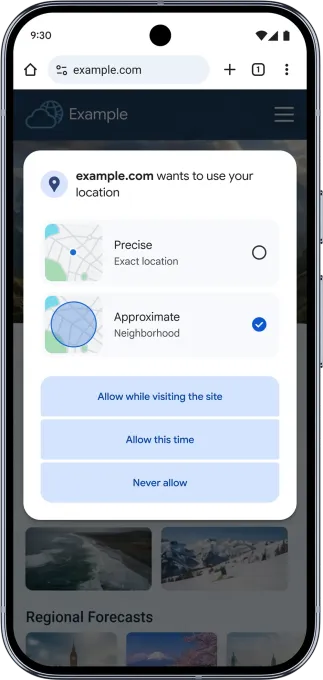
Google has officially rolled out a new privacy-focused update for Chrome on Android that changes how location data is shared with websites. Instead of automatically providing precise GPS coordinates, users can now choose to share an approximate location, marking an important step toward giving individuals more control over their personal data.

This change reflects a broader industry trend where major technology companies are rethinking how much sensitive information should be exposed by default, especially in everyday web browsing.

A More Flexible Approach to Location Data

Until now, Chrome on Android primarily allowed websites to request precise location data when a user granted permission. While this level of accuracy is useful in certain scenarios, it can also expose more information than necessary in situations where exact positioning is not required.

With the new update, Google introduces a more flexible system. Users will now be able to decide whether they want to share their exact location or a broader, less specific area instead.

According to Google, this distinction is important because not all online services need pinpoint accuracy. In many cases, a general idea of where a user is located is enough to deliver relevant content or functionality.

For example, a website showing local weather updates, news headlines, or regional recommendations does not necessarily need to know a user’s exact street location. In contrast, services like food delivery apps, ride-hailing platforms, or navigation tools still require precise coordinates to function correctly.

Google’s Position on Privacy and Control

In an official blog statement, Google emphasized that the new feature is designed to give users more meaningful control over how their data is shared with websites.

The company explained that users should not be forced into an all-or-nothing choice when it comes to location sharing. Instead, they should be able to adjust the level of precision depending on the context and their comfort level.

Google also reassured users that precise location sharing is still available when needed. If a website requires accurate positioning for essential functionality—such as mapping, navigation, or location-based ordering—the user can still grant full access.

This dual-option system aims to balance convenience and privacy without limiting the capabilities of modern web services.

Expansion Plans Beyond Android

While the feature is currently available on Chrome for Android, Google has confirmed that it plans to extend this capability to desktop versions of Chrome in the near future. This would bring a consistent privacy experience across devices, allowing users to maintain the same level of control whether they are browsing on mobile or computer.

However, the company has not yet provided a specific release timeline for desktop support. Additionally, Google has not confirmed whether or when similar functionality will be introduced for Chrome on iOS, leaving Apple users uncertain about future availability.

New Tools for Developers

Alongside the user-facing update, Google is also introducing new application programming interfaces (APIs) designed for web developers. These APIs will allow websites to request either approximate or precise location data depending on their specific needs.

This change encourages developers to think more carefully about why they are requesting location access in the first place. Instead of defaulting to precise location tracking, developers are now being urged to justify when such accuracy is truly necessary for their service to function properly.

For instance, a weather website could rely on approximate location data, while a mapping service might still require exact coordinates. This separation gives developers more flexibility while reinforcing privacy-conscious design practices.

A Small but Meaningful Step for Users

Although the update may seem minor at first glance, it represents a meaningful shift in how personal data is handled in everyday browsing. Users are no longer forced into sharing more information than necessary, and they gain the ability to tailor location permissions based on context.

Privacy advocates often argue that small adjustments like this can have a significant long-term impact, especially when adopted across widely used platforms such as Chrome. By reducing unnecessary precision in location sharing, Google is effectively minimizing the amount of sensitive data exposed during routine web activity.

Conclusion

The introduction of approximate location sharing in Chrome on Android highlights Google’s ongoing effort to refine user privacy controls while maintaining functionality for essential services. By separating approximate and precise location access, the company is offering a more nuanced approach that better reflects real-world usage.

As this feature expands to other platforms and developers begin adopting the new APIs, users may find themselves with greater transparency and control over how their digital footprint is shared online.

Pets

The Best Smart Pet Gadgets in 2026: How AI Is Changing Pet Care at Home

Pet ownership has always been about routine—feeding schedules, cleaning, supervision, and making sure your animals are safe when you’re not around. But in recent years, that routine has started to shift. With AI-powered devices, automation tools, and smart home integration, caring for pets is becoming more data-driven, remote, and surprisingly high-tech.

From tracking movement in real time to automating feeding and even analyzing behavior patterns, today’s pet gadgets are designed not just for convenience, but for continuous monitoring and peace of mind.

Below is a closer look at some of the most advanced and popular pet tech products currently on the market.


Petlibro AI Smart Camera: Turning Pet Monitoring Into Real-Time Intelligence ($99.99 + subscription)

The Petlibro Scout Smart Camera represents a new generation of AI-powered pet surveillance systems. Unlike traditional pet cameras that simply stream video, this device actively interprets what it sees.

The camera can follow your pet automatically as they move through a room, adjusting its view without manual control. It also includes two-way audio, allowing owners to speak directly to their pets or use pre-set sounds like chirps to get their attention.

What makes it stand out is its AI-driven behavior recognition. The system can identify specific actions such as eating, drinking, walking around, or using the litter box. It then organizes this information into daily summaries, complete with snapshots stored in cloud memory for up to 30 days.

In practice, this turns a simple camera into a behavioral tracking system that helps owners understand routines and detect changes in habits.

However, full functionality requires a subscription, with plans ranging from around $12 to $17 per month depending on the level of analytics and storage.


Life360 GPS Pet Tracker: Real-Time Location Control for Pets ($49.99 + subscription)

The Life360 GPS Pet Tracker is designed for one of the most common fears among pet owners: a lost animal.

This small device attaches to a pet’s collar and continuously updates its location through a connected smartphone app. It provides live tracking and allows owners to define “safe zones” through geofencing. If a pet leaves a designated area—such as a home or yard—the system immediately sends an alert.

Beyond basic tracking, the device includes additional safety features such as escape notifications that can be shared with nearby users, increasing the chances of recovery if a pet goes missing. It also includes a built-in light to help locate animals at night.

To unlock the full suite of tracking and alert features, users need a paid subscription, with higher tiers unlocking more advanced monitoring capabilities.


Petlibro Wet Food Feeder: Automated Feeding With Cooling Technology ($149.99)

The Petlibro Polar Wet Food Feeder focuses on one of the trickiest aspects of pet care: keeping wet food fresh.

Unlike standard automatic feeders that only handle dry kibble, this device includes refrigerated compartments designed to preserve wet food safely for extended periods. It can hold multiple pre-portioned meals, allowing pet owners to be away for up to several days without worrying about spoilage.

The system is controlled through a mobile app that allows scheduling, monitoring, and notifications. Owners receive alerts when feeding begins, when food is consumed, or if connectivity issues occur at home.

A particularly useful feature is its resilience system: even during power outages or internet disruptions, the device is designed to maintain cooling for several hours, reducing the risk of food spoilage.

This makes it especially valuable for cat owners who rely on wet food diets, which require stricter storage conditions than dry alternatives.


Pawport Smart Pet Door: Secure, App-Controlled Entry ($699)

Traditional pet doors often come with a trade-off: convenience for pets but vulnerability to weather, pests, and unwanted animals. The Pawport Smart Pet Door is designed to solve that problem through a fully automated, reinforced entry system.

Built with heavy-duty materials like steel and aluminum, the door uses a secure locking mechanism that prevents intrusion from outside animals or environmental conditions such as wind and rain.

The system includes a tracking tag that communicates with the door, allowing it to open automatically when your pet approaches. Motion sensors help ensure smooth and safe entry without manual input.

Owners can also control the system remotely through a mobile app, setting schedules or locking the door when needed. Voice assistant integration with platforms like Alexa, Siri, and Google Assistant adds another layer of convenience for smart home users.

In essence, this device transforms a simple pet door into a fully controlled access system.


PetKit PuraMax 2: Smart Litter Box With Health Tracking ($499.99)

The PetKit PuraMax 2 automatic litter box is one of the most advanced hygiene systems available for cats, combining automated cleaning with health monitoring features.

The device automatically removes waste and seals it in a compartment designed to reduce odors. It also includes deodorizing systems that activate after each cleaning cycle and at scheduled intervals throughout the day.

Where it becomes more than just a cleaning device is in its data collection capabilities. The connected app tracks how often a cat uses the litter box, duration of visits, and even weight changes over time.

These metrics can provide early warning signs of potential health issues, such as urinary tract problems or changes in eating behavior.

For pet owners, this shifts the litter box from a maintenance tool into a passive health monitoring system that continuously collects useful behavioral data.


The Bigger Trend: Pets Are Becoming Part of the Smart Home Ecosystem

Taken together, these devices highlight a clear trend: pets are increasingly being integrated into the same smart systems that manage lighting, security, and home automation.

Instead of relying purely on human observation, modern pet care is beginning to use:

  • Continuous video monitoring with AI interpretation
  • GPS-based behavioral tracking
  • Automated feeding and environmental control
  • Health pattern analysis through routine data collection

While these tools offer convenience and peace of mind, they also introduce a new layer of dependency on subscriptions, apps, and cloud services.

In other words, pet ownership is no longer just physical care—it is becoming a digitally managed experience.


Final Thoughts

These gadgets don’t replace the emotional side of pet ownership, but they do change how daily responsibility is handled. For busy owners, they reduce uncertainty and provide constant awareness. For tech-focused households, they turn pet care into a connected, data-rich system.

The real question moving forward is not whether these tools are useful—but how much automation is too much when it comes to caring for living, feeling animals.

Freelancing

Fiverr Pushes “Personal AI” for Freelancers: A New Model for Gig Work in the Age of Automation

Fiverr is moving deeper into artificial intelligence with a controversial but ambitious strategy: helping freelancers train AI models on their own work so they can automate parts of their services and scale their income. The company, which operates one of the largest gig marketplaces globally, says this shift is meant to protect creators rather than replace them—but the implications are far more complex.

At a recent event, Fiverr announced a suite of AI-driven tools designed to integrate generative AI directly into freelance workflows. The centerpiece of this initiative is what the company calls the Personal AI Creation Model, a system that allows selected freelancers to build custom AI models trained on their past work.


Turning Freelance Work into Trainable AI Models

The core idea behind Fiverr’s new system is simple but disruptive: instead of repeatedly producing work manually, freelancers in fields such as voice acting, graphic design, writing, and digital marketing can train AI systems on their own creative output.

Once trained, these models can generate new content in the freelancer’s style or voice. Fiverr envisions a marketplace where clients can choose between:

  • Fully human-created work
  • AI-generated work trained on a freelancer’s portfolio
  • A hybrid combination of both

This effectively transforms a freelancer’s body of work into a reusable digital asset—something that can generate outputs on demand without requiring constant manual effort.

According to Fiverr CEO Micha Kaufman, the goal is to ensure that freelancers remain central in an increasingly automated industry. He framed the initiative as a way to preserve relevance in a labor market that is rapidly being reshaped by generative AI.


Monetizing AI Versions of Yourself

Under Fiverr’s model, freelancers would not only create content but also monetize the AI systems trained on that content. They will be able to set pricing for access to their personal AI models, meaning clients could effectively “rent” a version of the freelancer’s creative style.

The company argues this could unlock new revenue streams and allow top creators to scale their output far beyond human limitations.

However, access to the program is limited at launch. Only a small group of “top, vetted” freelancers will initially be allowed to build AI models, suggesting Fiverr is still testing how the system works in practice before opening it widely.

The Personal AI Creation Model will cost freelancers around $25 per month, making it a paid tool rather than a built-in feature.


AI Assistants for Client Communication

Alongside the creation model, Fiverr is also introducing a Personal AI Assistant designed to handle client communication and administrative tasks.

This assistant is trained on a freelancer’s:

  • Chat history with clients
  • Profile and gig descriptions
  • Past communication patterns

The tool can respond to messages when the freelancer is offline, manage routine inquiries, and even provide business insights. Fiverr is positioning it as a productivity layer that reduces time spent on repetitive communication.

Freelancers can configure how the assistant behaves, including setting rules for when conversations should be escalated to a human. However, questions remain about how much control users will truly have over sensitive client interactions and which conversations are used for training.

The assistant is priced separately at around $29 per month or included in higher-tier subscription plans.


Fiverr’s Argument: Empowerment, Not Replacement

Fiverr insists that freelancers will retain ownership of their work and the AI models trained on it. The company has also stated that it will not use freelancer data to train internal competing models.

Instead, it describes the system as a way to ensure creators “remain at the center of the creative economy,” arguing that AI should extend human capability rather than replace it.

A company spokesperson emphasized that freelancers can disable their AI models at any time and still retain access to generated content.

Fiverr also claims it will only use aggregated, anonymized data to improve platform performance, rather than replicating individual creative styles for its own products.


The Pressure to Participate in an AI Economy

Despite the optimistic framing, the rollout raises difficult questions about economic pressure in gig work. Freelancers who choose not to adopt AI tools may find themselves at a disadvantage in a marketplace where clients increasingly expect faster delivery and lower prices.

The gig economy is already characterized by instability, limited protections, and fluctuating demand. The introduction of AI systems that can replicate human work at scale could intensify competition even further, particularly in fields like writing, design, and programming.

Some industry studies have already suggested that generative AI tools are reducing demand for entry-level freelance tasks, increasing pressure on workers to adapt or risk losing income opportunities.


Ownership, Data, and Control Concerns

One of the most debated aspects of Fiverr’s approach is data usage and control. While the company says freelancers retain ownership of AI-generated outputs, it is less clear how much control users have over training data—particularly in sensitive areas like client conversations.

Questions remain around:

  • Whether freelancers can selectively exclude certain chats from training
  • How client data is handled in AI-assisted communication
  • What safeguards exist for confidential or sensitive project information

Fiverr has stated that freelancers can adjust assistant behavior and define when human intervention is required, but many operational details are still unclear.


A Broader Shift in the Gig Economy

To complement its AI rollout, Fiverr is also introducing a program that will grant top-performing freelancers shares in the company. While details about eligibility and payout structure remain vague, the move signals an attempt to align platform success with contractor participation.

At the same time, Fiverr itself remains a relatively small public company by market capitalization, but one that is actively experimenting with how gig platforms evolve in an AI-driven economy.


Conclusion: A Turning Point for Freelance Work

Fiverr’s push into personal AI models represents a significant shift in how creative labor is defined and monetized. It blurs the line between human work and machine-generated output, turning individual skillsets into scalable algorithms.

Supporters may see it as a way to increase efficiency, income potential, and creative reach. Critics, however, may view it as another step toward commodifying creative labor in an already competitive and unstable gig economy.

What is clear is that Fiverr is betting heavily on a future where freelancers are no longer just workers—but also owners of personalized AI systems that replicate and extend their abilities.